This product is Coming Soon!
Pulsar Modular · Germanium Diode Compressor

P252MDN Diode

Attitude, aggression and power.

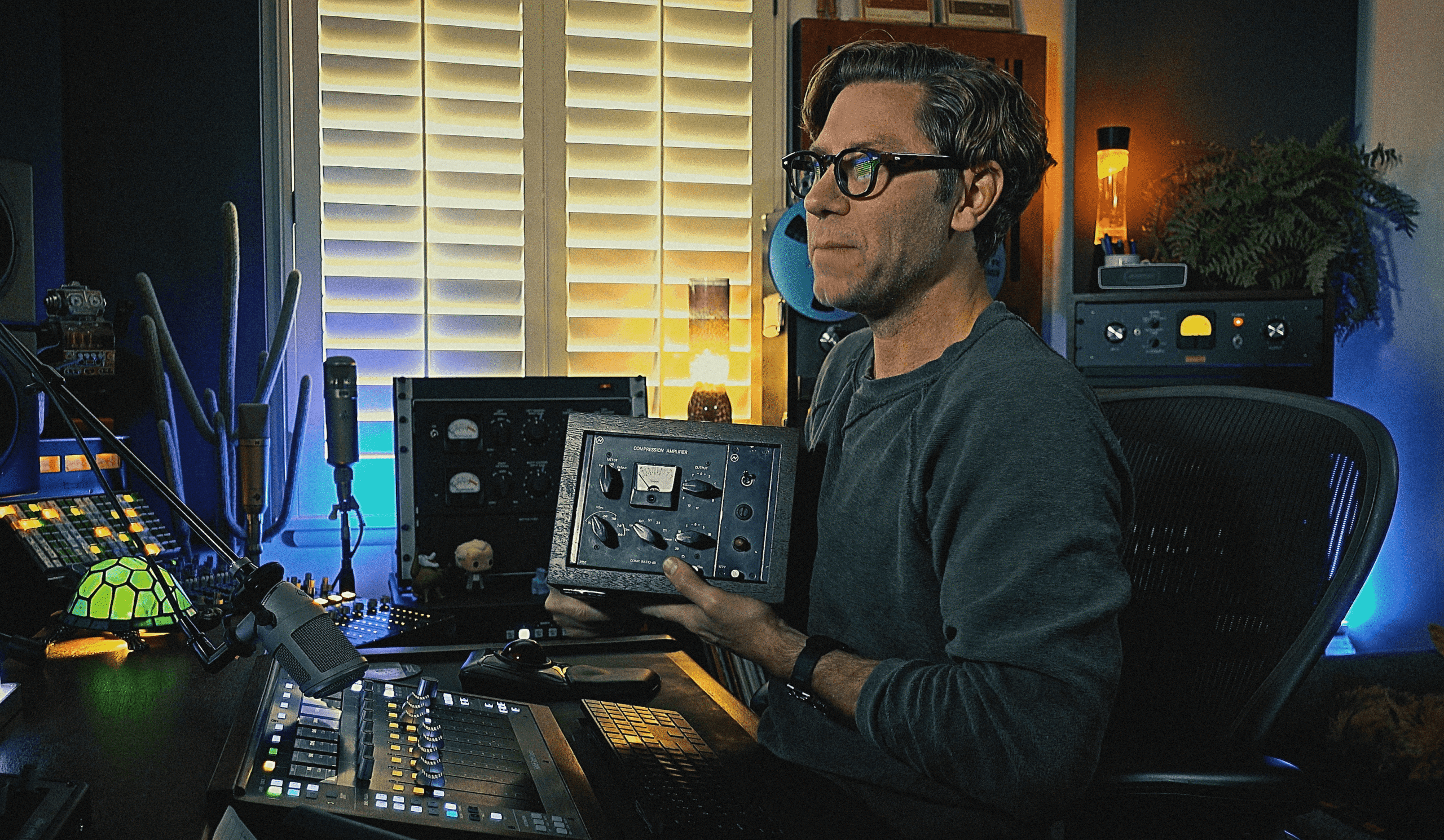
Marc Daniel Nelson and Pulsar Modular once again partner for an exciting new plugin. In Marc’s search for unique, history-driven studio gear, he purchased this extremely rare 2252 from a former tech of the famous Wessex Studios in London. Incredibly famous for producing the majority of the 1970’s and 80s punk albums for artists like The Clash, The Sex Pistols, The Pretenders, Queen and many more. This 2252 was present for all of it. It is a 1968 Neve design that ran for one short production window before germanium gave way to silicon and spent decades in the room where music history was made. After nearly two years of development, Pulsar Modular and Marc Daniel Nelson designed one of the most unique compressors on the market. What was once described as unusable in its early days became a staple for the sound of Attitude, Aggression and Power.

Price
$165
Acquire Try free for 15 days Coming soon
00Hours
:
00Minutes
:
00Seconds
· AU · VST3 · AAX · Mono and stereo
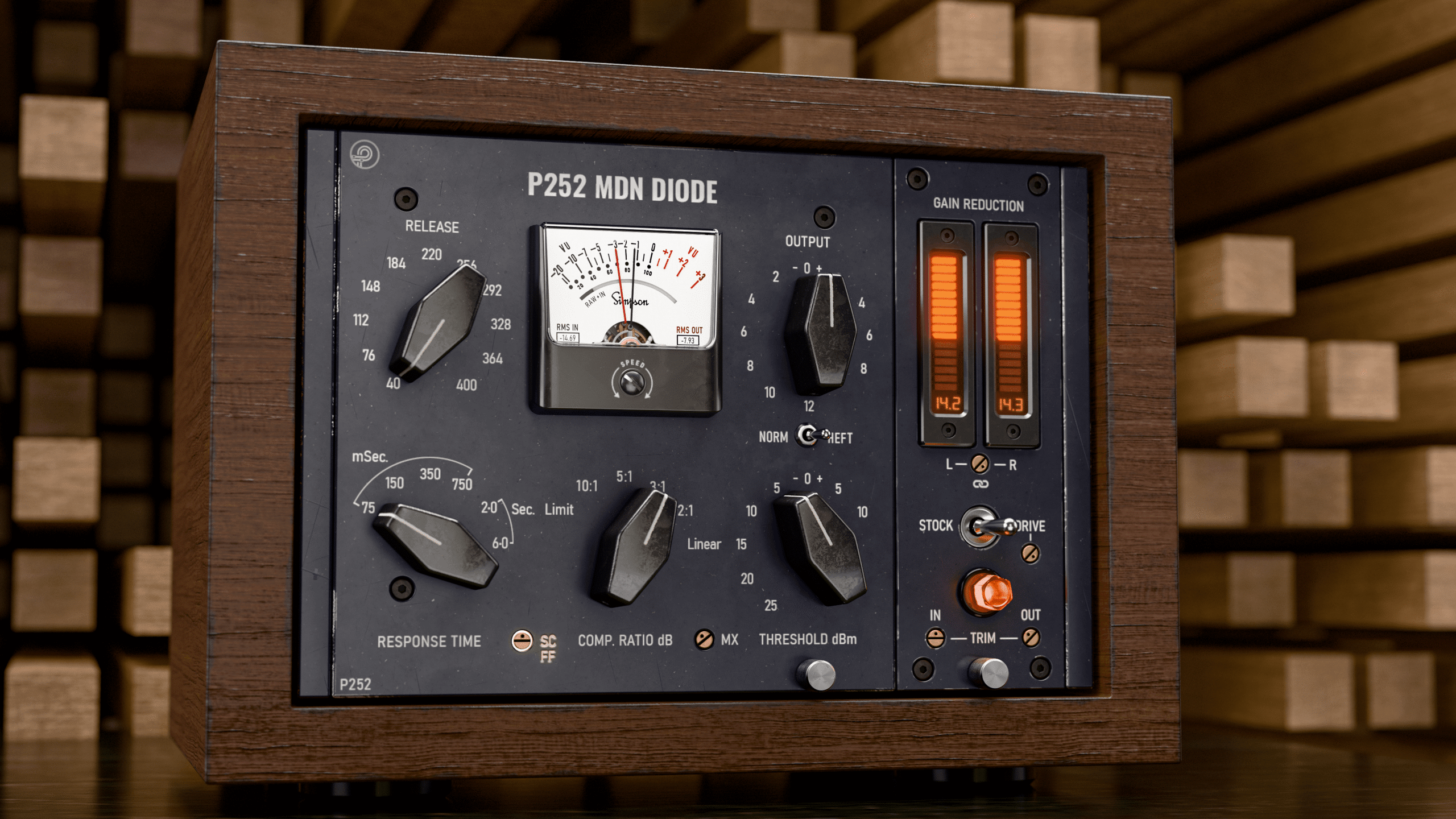
P252 MDN Diode compressor plugin interface
Marc Daniel Nelson holding the Neve 2252 compressor
The unit

Germanium diode bridge, feedback: a beautiful character to behold

Attitude, Aggression and Power. Freaking sweet…

As an extension of my previous plugin releases, the P455 MDN Sidecar and the P821 MDN Tape, I wanted to embark once again on a journey down memory lane to talk about my history and passion for the sounds within music.

It all started well over 26 years ago when I became obsessed with the magic and personalities of sonics, why some albums sounded powerful and unique, while others felt more intimate and organic.

In my search for unique, history-driven studio gear, I have found many things to be constant. Sometimes it’s a piece of history, whether that be studio gear used on a historic album. Other times, it’s something very familiar and easily accessible. My passions have always connected to one-of-a-kind gear. Things that are incredibly rare, both in design and in the number ever made. The secret weapon.

I purchased this 2252 from a former technician of the famous Wessex Studios in London, a studio renowned for producing many of the iconic punk albums of the 1970s and ’80s for artists such as The Clash, The Sex Pistols, The Pretenders, Queen, and many others.

In 1968, the studio purchased Rupert Neve’s third console ever built. Along with that console came two 2252 modules. Throughout the 1970s, the Neve console was eventually sold off, but the two compressors remained in racks at the studio, continuing to serve as the spearhead trailblazers of the facility’s main tracking compressor chain.

Like the API console at Sausalito Record Plant or the Stephens 821 tape machines from Producer’s Workshop, this new plugin of mine carries a massive history and represents something incredibly unique and rare.

The first Neve 2252 was introduced in 1968 and was designed by Rupert Neve himself. It was one of his earliest compressor designs and helped lay the foundation for legendary models such as the 2254 and the 33609. Unlike those later designs, however, the 2252 utilized a Germanium diode-bridge topology.

At the time, this was an unpredictable and aggressive design. It introduced distortion and artifacts into the signal, ultimately making it a very short-lived compressor. I believe it was a very limited, short run before Neve moved on to silicon diodes shortly afterward.

What makes this so special? My answer is simple: personality and character.

Unlike the more stable diode compressors that followed, this unique beauty used Gardner octal-based transformers, quite different from those found in the better-known 1073 modules. The combination of these transformers and the Germanium diode design gives this compressor a remarkably explosive and firm sound.

My love for unique-sounding gear has been a lifelong journey, and when I found this 2252 and learned its history, I instantly fell in love with it.

It is not only my go-to compressor for bass guitar, but also for rock vocals, drums with attitude, and piano, anything that needs a firm grip and some serious personality. It adds just the right amount of fur to the music and always puts a smile on my face.

No other compressor sounds like this.

After nearly two years of development, Pulsar Modular and I designed what I believe to be one of the most unique compressors on the market. What was once described as unusable in the early days of its life, during an era dominated by the stuffy British broadcast engineers of the 1960s, ultimately became a defining part of the sound of Attitude, Aggression and Power.

Freaking sweet…

Marc Daniel Nelson

A unit like this cannot be captured by a static curve, an impulse response or a one dimensional profile, because the 2252 is not a moment. It is a moving system, where the signal, the feedback path, the detector, the diode stage, the output level and the timing all react to each other continuously. Everything here was modeled algorithmically and tuned by ear.

Engineers who use it

From the pros, for the pros.

1 / 7
Bob Clearmountain

“I just got a chance to try Marc’s new compressor plug-in, ‘P252 MDN Diode’. I actually really love it! It compares quite favorably to my trusty LA-3A for vocals. At a 3:1 ratio, it has a very similar warmth and transparency. Clicking in the ‘Heft’ switch seems to even add a bit more pleasant warmth to the lower mid-range. Now when you crank the threshold down and set the ratio to 5 or 10:1, keeping the Release at 75 ms and the ‘Response’ to the lowest setting of ‘75’, you get something more like an 1176 for a more in-your-face type of response which is great for drums or guitars or a rock lead vocal. It’s got a few other cool features like ‘Drive’ which adds a bit of edge to an instrument or vocal that is a bit too clean.

Over all it’s a great addition to a versatile dynamics plug-in collection and in some cases outdoes some of my analog compressors. Oh.. and it looks great!”

Bob Clearmountain
Multi-Grammy winning producer and engineer
David Bowie · Rolling Stones · Bruce Springsteen
Josh Gudwin

“It’s a dirty little fu€ker”

Josh Gudwin
Multi-Grammy winning engineer
Bad Bunny · Justin Bieber · Dua Lipa
John Greenham

“Another hit from Marc and Pulsar Modular! The sound of this plugin is huge and vibey. Can be really punchy and special even on Masters! It reminds me of a different era of music making. Nothing sounds like this ITB”

John Greenham
Multi-Grammy winning engineer
Billie Eilish · Lady Gaga · Sam Smith
Dweezil Zappa

“When a NEVE is involved you have my attention. The squish of the compression comes with a free side order of density. From subtle control to swerved out of control overdrive, this new take on a classic is ready to dominate your tracks.”

Dweezil Zappa
Grammy winning artist, engineer and producer
Dave Way

“Wow! I’ve never used the hardware version but I’m loving the grit in this plug-in! Killer on guitars, vocals, drums.”

Dave Way
Grammy winning engineer and producer
Fiona Apple · Michael Jackson · Paul McCartney · Foo Fighters
Ken Caillat

“Now we’re talking! The 252 is just amazing at getting things to sit with attitude!”

Ken Caillat
Multi-Grammy winning producer and engineer
Fleetwood Mac · Paul McCartney · Pink Floyd
John Lou Lousteau

“I’m LOVING this! Great job! I put it on my drum and bass bus to hype them up and I’m keeping it in my master mix template.”

John “Lou” Lousteau
Award winning producer and engineer
Foo Fighters · Iggy Pop · Joan Jett
The panel

The original had no Release knob. And no way to see what it was doing.

Trim In
The 2252 was built for 1968 line level, so a modern track arriving hot will grip and thicken the sound before you have asked for any compression. Trim In is where you deal with that. It is preparation, not a volume control.
Threshold
The detection point inside the circuit never moves. What Threshold changes is how hard you drive signal into it, the way a preamp feeds a compressor. Toward -25 you get compression, density and saturation, and toward +10 it may not trigger at all.
Ratio
Linear, 2:1, 3:1, 5:1, 10:1, Limit. The feedback path softens every slope, so these read as musical positions rather than arithmetic, and Linear leaves the signal path running with no curve at all.
Response Time
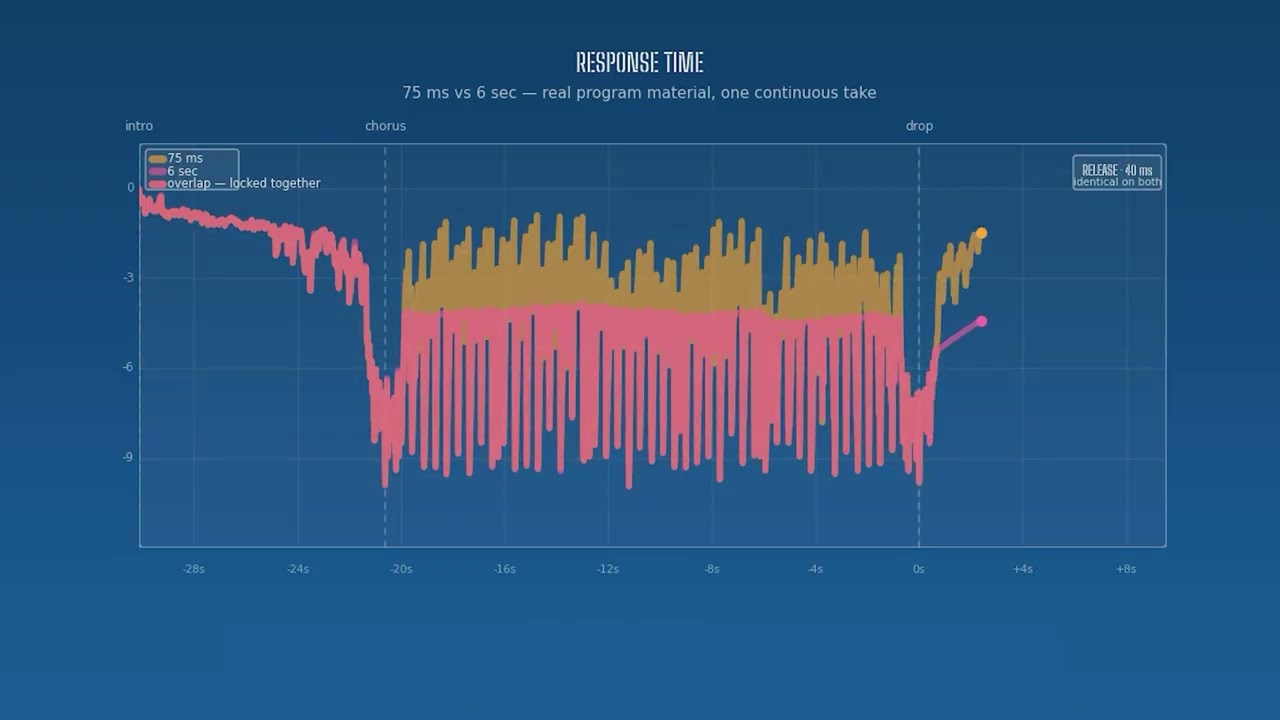
There are two families here. 75 through 750 ms all track the music, just at different speeds. 2 s and 6 s genuinely hold: they arm on about two seconds of sustained level and keep that grab through the gaps.
Release
On the hardware this was a fixed 40 ms stage with no front panel control. Here it runs out to 400 ms, fast for punch and articulation, slower for thicker sustain and less movement between hits.
Output
This is not makeup gain. With the sidechain in FB it feeds the detector, so it colors and compresses at the same time; in FF it sits downstream and moves level and transformer tone. Trim Out is the clean level control.
SC
Feedforward or feedback detection, switched by clicking the SC label. The sidechain high pass reaches 200 Hz and filters the detector only, never the audio. EXT keys the unit from the host sidechain input, delay aligned and oversampling aware.
Stock / Drive
STOCK is the unit as it is. DRIVE brings out its own grit, dialed in on a screw that runs 0 to 100%. The two are level matched, so switching between them compares character and not loudness.
Norm / Heft
NORM is the standard low end and HEFT puts weight underneath it. NOISE, sitting next to them, brings in the hardware’s own noise floor at a lower and more musical level than the original. It ships off.
Simpson VU
Black needle for the raw DAW input, red for the processed output, and a RAW+IN arc that shows how hard the modeled unit is actually being fed. Click the face to move between the VU and dBFS scales. The screw under the needles changes ballistics only and never the audio.
Match
A live reading of how much louder or quieter the plugin is making the signal. Leave it on while you explore. Switching it off commits the correction into Trim Out and disengages in one move.
Specifications

The technical bits.

Formats
AU, VST3, AAX
Channel modes
Mono, stereo
Internal precision
64-bit floating point throughout the DSP path
Threshold
-25 to +10 dB, 5 dB steps
Ratio
Linear, 2:1, 3:1, 5:1, 10:1, Limit
Response Time
75 ms, 150 ms, 350 ms, 750 ms, 2 s, 6 s
Release
40 ms to 400 ms
Output
-12 to +8 dB, 2 dB steps
Trim In
-24 to +12 dB
Trim Out
-24 to +12 dB
Sidechain
SC HPF 0 to 200 Hz, detector path only. FF or FB, default FF. EXT keys P252 from the host sidechain input, default INT.
Mix and Link
Mix 0% to 100% dry, equal-gain blend. Link 0% to 100%.
Oversampling
Off, 1, 2, 3. Latency is oversampling-dependent, zero with OS off.
Switches
STOCK / DRIVE with a 0% to 100% Drive amount, default STOCK at 0%. NORM / HEFT, default NORM. NOISE, default off.
VU Speed
Meter ballistics only, no effect on audio
Mac
macOS 10.14 or later. Apple Silicon and Intel, Universal 2 binary.
Windows
Windows 10 or later, x64
System
1440 × 900 or 1280 × 960 minimum display, 2 GB RAM
License
One-time challenge and response, up to 2 machines
Customer reviews

What owners say.

No reviews yet.
Downloads

Guides & resources.

User guide · dark
English PDF
German PDF
Japanese PDF
User guide · print
English PDF
German PDF
Japanese PDF
Quick guide

The signal chain, the four ideas the plugin runs on, every control on the face, and starting points for drums, vocals, bass and mix bus.

Coming very soon.

P252 MDN Diode is in final testing. Purchase and the 15 day demo open on release day.

Fifteen days, no commitment.

Click demo, check out for $0, and your authorization code arrives by email. Fully functional, on two computers.