|
|
|
Updates and Sneak Peek: What’s Next at Pulsar Modular (Live Saturday)
|
|
|
|
Sahara v1.5.1
Sahara is designed around a fixed internal threshold at –18 dBFS. In modern sessions, hot material often interacts with compression as soon as you insert it, by design. Sahara is an original Pulsar Modular design, not modeled after any specific hardware.
Program-dependent attack and release
Sahara puts you in control of timing in a practical way. Instead of dialing fixed attack and release numbers, you steer the behavior as more or less based on the material. The compressor adapts its timing to the signal’s envelope and density, so settings translate better when you move between sources, and you avoid the usual “wrong release” outcomes like pumping on one track and feeling too slow on another.
Hammer applies an EQ-weighted emphasis around 600–900 Hz, helping stabilize vocals and instruments where intelligibility lives, without dulling highs or overreacting to lows.
What’s new in v1.5.1
- Expanded curated presets, now presented in a well navigable subfolder hierarchy.
- Fix: Correct compression behavior when Oversampling is set to HD.
- Ongoing development commitment, with future updates planned and full compatibility with previous versions.
A fully functional 30-day demo is available. If you previously demoed Sahara and did not purchase, you can request a demo reset to re-evaluate the latest version.
|
|
|
|
|
|
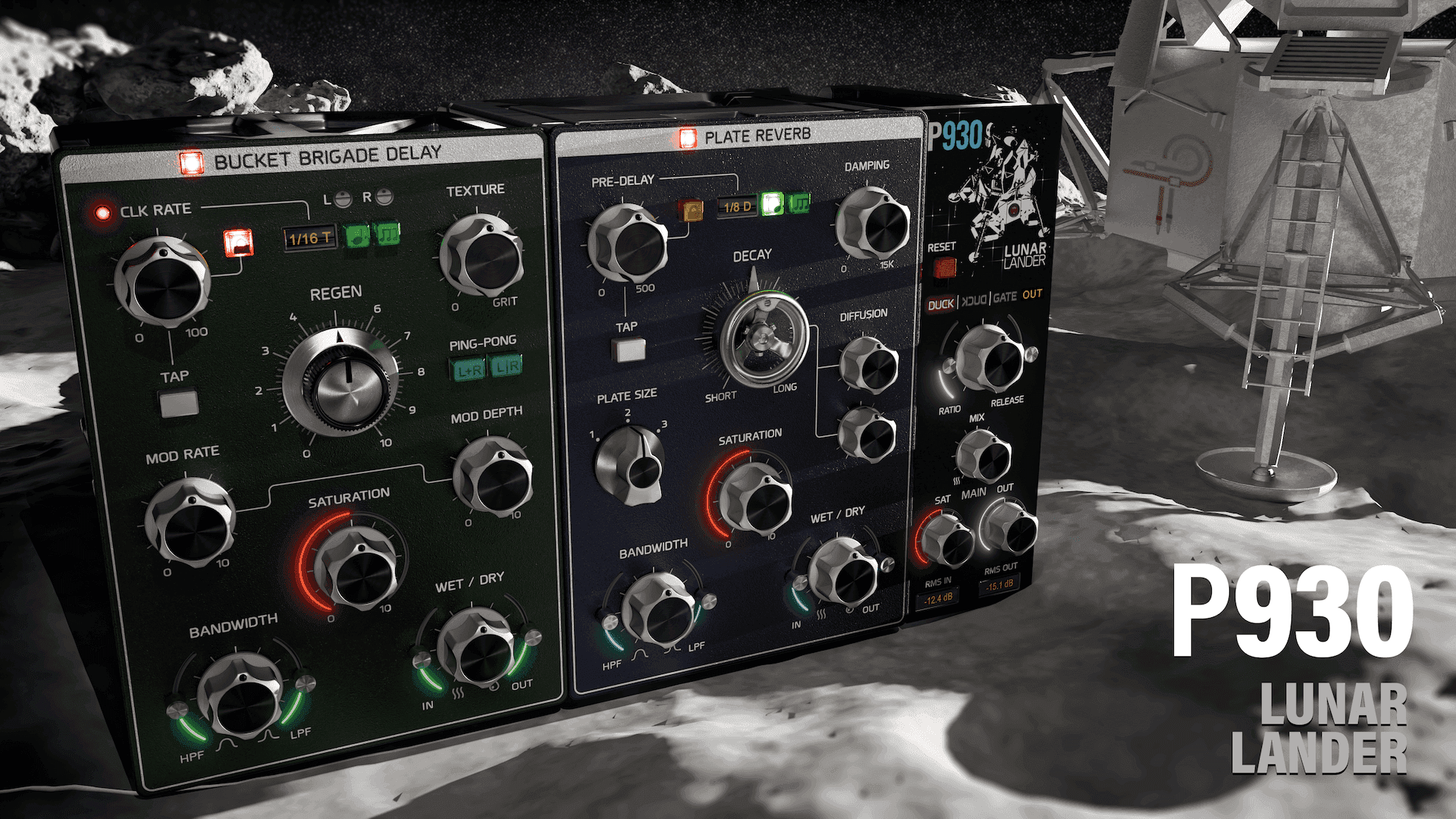
P930 Lunar Lander v2.5.2
Bug fixes
- The sudden burst issue when switching presets has been resolved.
- Crackling in the HP/LP filters when quickly moving the cutoff frequency has been fixed.
|
|
"Intuitive, three-dimensionally textured, inspirational, and musical.
The Lunar Lander melds delay, reverb, and modulation into a single creative tool that expands the depth
of what I can imagine."
Justin Stanley
Grammy nominated engineer, producer, musician
(Prince, Jamie Lidell, Mocky, Nikka Costa)
|
|
|
|
|
|
|
|
In this live episode of The Red Button, we talk about compression as a way of shaping articulation, the way a performance speaks, holds, breathes, and releases. Sometimes that means helping a phrase connect and lean into a more legato impression. Other times it means letting the transients lead and reinforcing a more staccato sense of motion. The point is not numbers on a dial, it is how the instrument is perceived as it is being played.
|
|
|
|
We also share a preview of Zorba, including a quick look at the GUI and audio directly from the synth. The goal is not to present a finished story, but to let you hear where it is heading.
Finally, we talk about the relaunch of P915 Medusa and the new workflow perspective behind it, how we want it to be approached musically, and what changes when you stop thinking in “EQ terms” and start thinking in contribution, balance, and intent.
e-Wallet prizes will be given during the show. If you want a notification when the live stream starts, sign up here:
|
|
|
|
|
|
|
|
|
|
|